


Case studies, District heating, Municipal buildings and facilities, Others, RES, Residential buildings, Street lighting, Transport
Municipal Development Coordination Platform 2025 in Ukraine: key outcomes
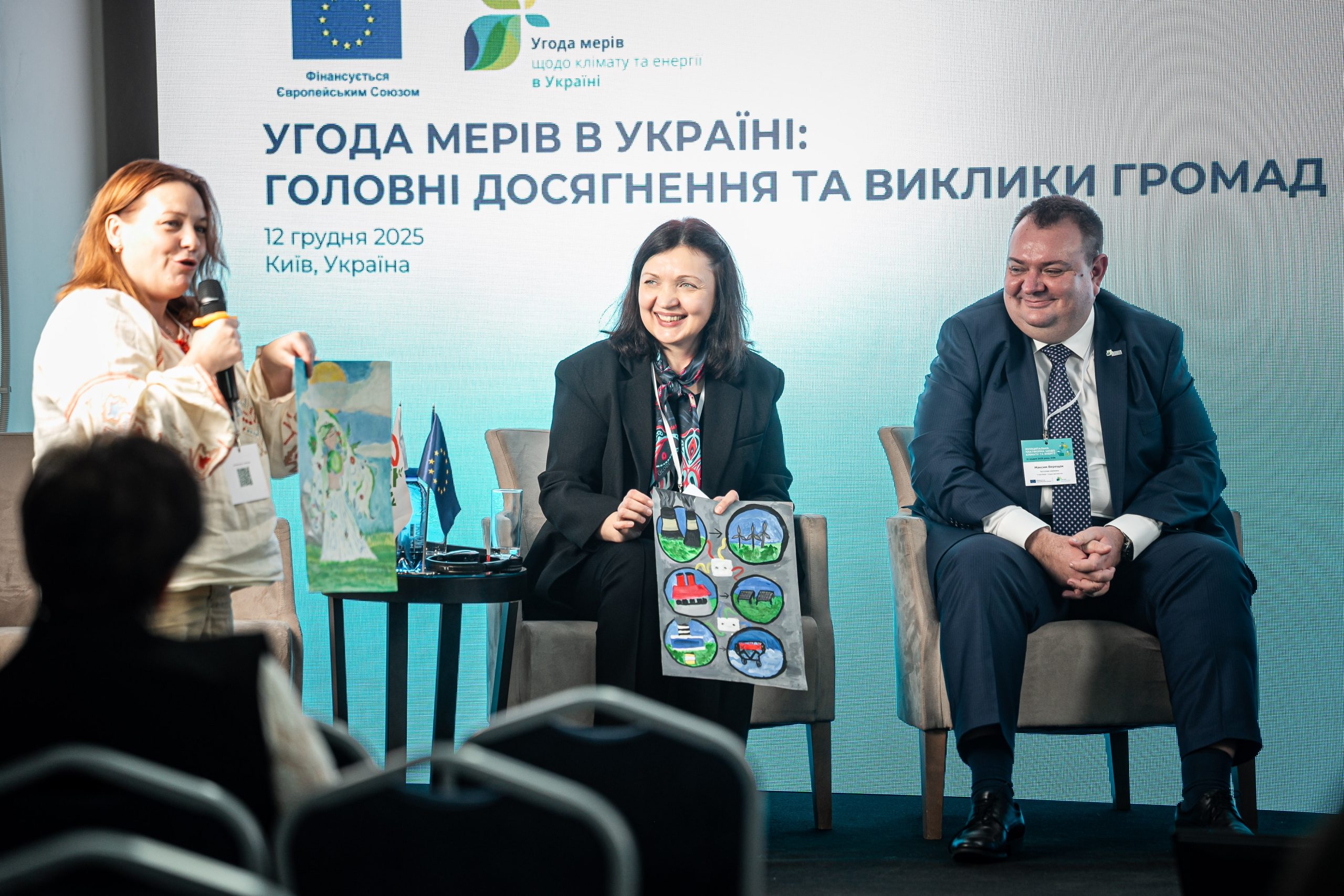
The CoM East Municipal Development Coordination Platform (MDCP), which took place on 12 December 2025 in Kyiv, brought together 82 participants, including mayors and deputy mayors, representatives of the Government of Ukraine, the European Union, international financial institutions and experts. The event served as a high-level coordination forum to strengthen the role of municipalities in national energy and climate policy and to align local action with Ukraine’s EU integration pathway.
The opening session highlighted a shared understanding that green recovery is inseparable from Ukraine’s European integration, and that cities already determine the pace and quality of this transition.
“Ukraine’s recovery and reconstruction depend on municipalities,” said Jocelyn Cornet, Head of the Reconstruction, Energy, Infrastructure and Environment Section of the EU Delegation to Ukraine. “You are working in extremely difficult conditions — repairing energy and water infrastructure, managing tight budgets, while ensuring that the country continues to function. As I travel across Ukraine, I see a strong appetite for Europe and for green recovery, and we are ready to support this process. The EU expects local authorities to have a real voice in our engagement, particularly in the implementation of recovery investments.”


“We are relaunching Ukraine’s climate agenda,” said Pavlo Kartashov, Deputy Minister of Economy, Environment and Agriculture of Ukraine. “Starting next year, and in close consultation with municipalities, we will begin work on establishing an emissions trading system in Ukraine. While climate strategies are developed at the national level, they are implemented in cities and regions, which makes cooperation with municipalities essential. Another priority is climate and environmental education, where we see strong demand and shortage of experts.”
Energy security and sustainable energy development


The first panel focused on energy security and sustainable energy development, demonstrating how the war has accelerated local energy decisions that were previously postponed for years. Municipalities shared practical solutions already being implemented across Ukraine, including energy service contracts, solar power plants with storage, bioenergy projects and reinvestment of energy savings into local resilience. Participants underlined that energy security is no longer only a technical issue, but also a governance and social challenge that requires strong municipal leadership and long-term planning.
Water as a strategic resource


The second panel addressed water supply and wastewater management, highlighting that water has become a strategic resource for communities under climate change, infrastructure damage and financial pressure on utilities. Discussions focused on long-term planning, financial sustainability and the transition from emergency responses to development roadmaps. International partners presented approaches combining short-term stabilisation with long-term investment planning, while national institutions stressed the importance of coherent state policy and coordination with municipalities.
Investment planning and project implementation under wartime conditions


Druing the third panel the participant discussed topics of investment planning and barriers to project implementation. Speakers from the European Union, national authorities and financial institutions noted that funding availability alone is not sufficient. Communities need strong project pipelines, institutional capacity, skilled teams and alignment with national planning frameworks to attract investment. Digital tools such as the DREAM were presented as instruments to improve transparency, prioritisation and coordination of public investments.
Youth and the future of communities
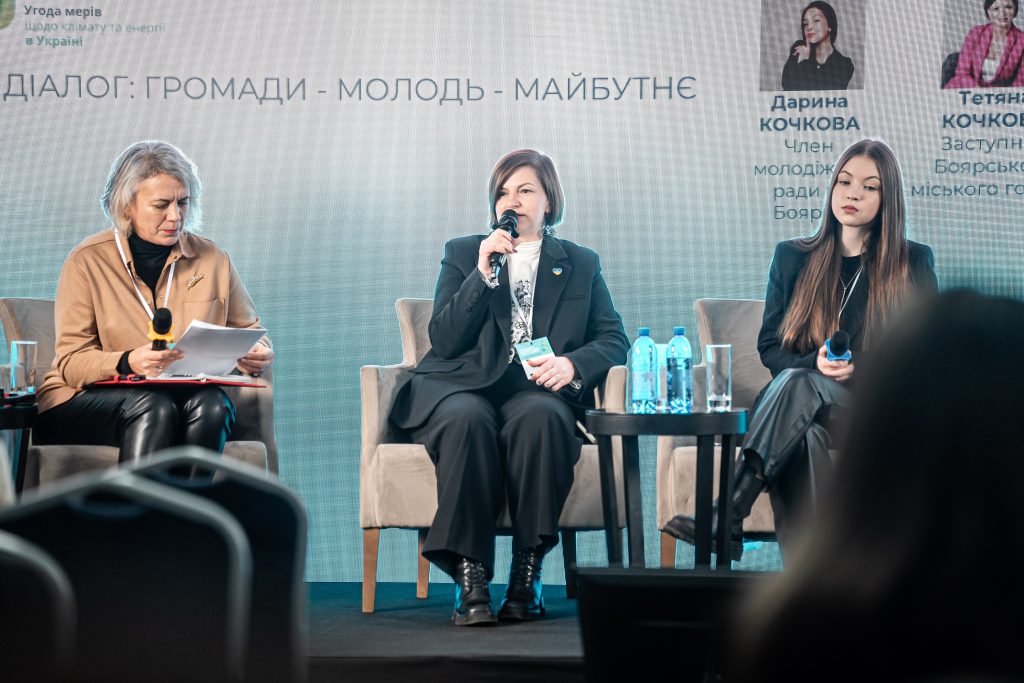

The concluding open dialogue focused on youth and community development, emphasising that recovery is not only about infrastructure, but also about people. Practical examples showed how youth spaces, participation mechanisms, education opportunities and international exchanges help retain young people and build trust at the local level.