


Case studies, District heating, Municipal buildings and facilities, Others, RES, Residential buildings, Street lighting, Transport
Armenian signatories learn to track municipal energy use
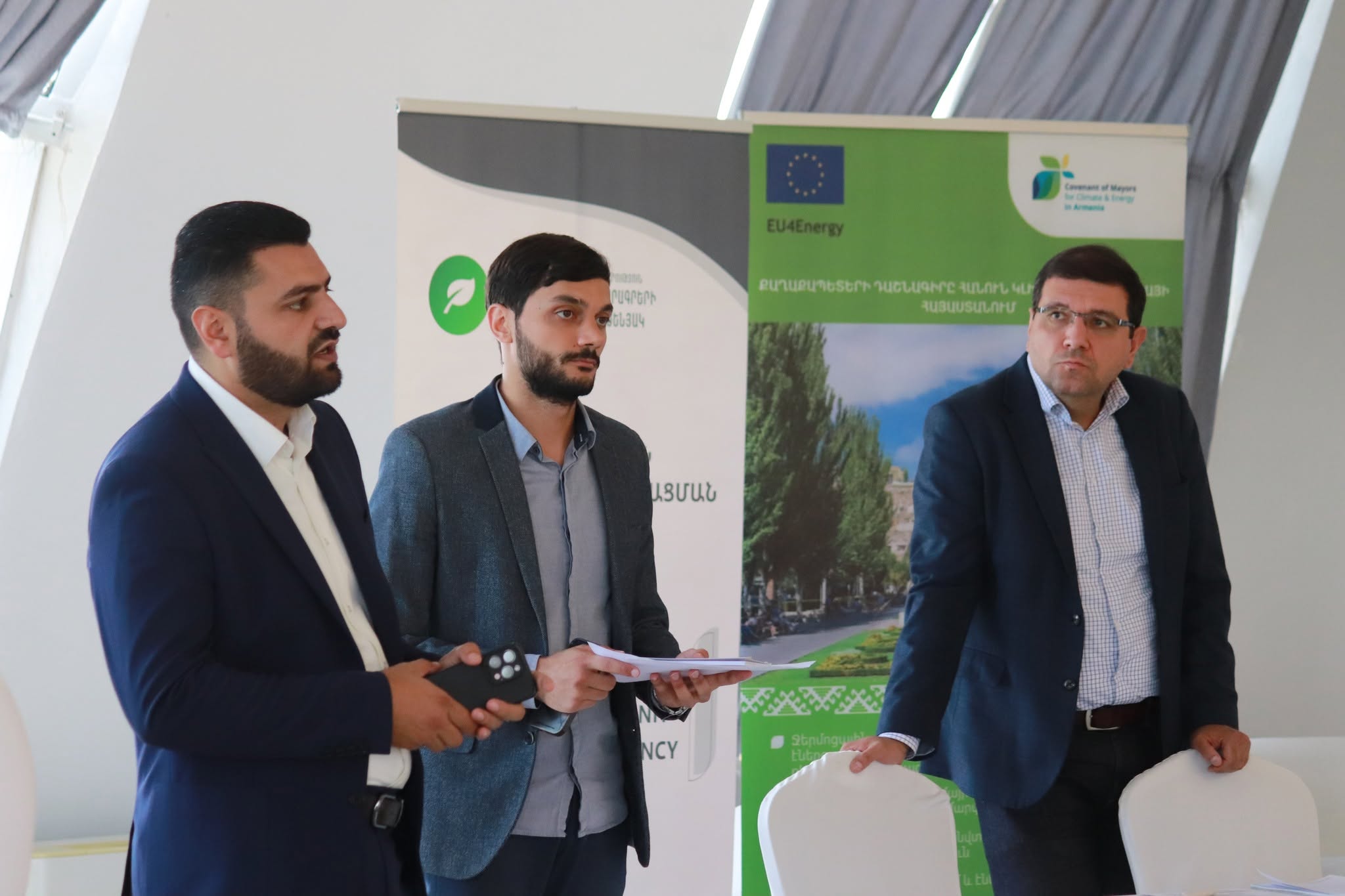
Representatives of 16 Armenian municipalities learned how to monitor energy use in public buildings and street lighting at a two-day training in Sevan on 24-25 September 2026. The Covenant of Mayors – East (CoM East) initiative organised the event with the Environmental Project Implementation Unit (EPIU) of Armenia’s Environment Ministry. Representatives of the Ministry of Territorial Administration and Infrastructure, the national coordinator of the Covenant of Mayors in Armenia, also took part, along with the German Agency for International Cooperation (GIZ) in Armenia.
Ashot Giloyan, Advisor of the Local Self-Governance Policy Department at the ministry, opened the training with Armen Ajamoghljan of EPIU.
Of the 30 Armenian signatories, five have appointed energy managers. Yerevan, Alaverdi and Stepanavan did so through projects run by the United Nations Development Programme (UNDP), while Talin and Martuni acted on their own initiative. Energy managers track how much energy municipal buildings, street lighting and transport use, and look for ways to cut it.


Most other communities do not collect or analyse consumption data, so measures to save energy and money are rarely carried out. Two gaps make this harder to fix. Few local administrations have qualified energy managers, and few have an easy-to-use energy management information system (EMIS) to record and analyse data. Without them, councils struggle to meet their Covenant commitments: drawing up Sustainable Energy and Climate Action Plans (SECAPs), putting them into practice and monitoring progress. As a result, a growing number of Armenian signatories have had their participation in the Covenant suspended.
The organisers said the training aimed to give local administrations trained staff and data systems to plan and track their energy strategies. Trainers presented the EMIS platform already run by Yerevan and Stepanavan, along with a step-by-step user guide for municipal staff. Participants learned how to list community-owned buildings and street lighting, enter consumption data and use the platform to track energy use. Arman Sukiasyan, Stepanavan’s energy manager, said his municipality had trained staff to collect and report data, and that the system had helped it save energy and money.


On the second day, three working groups carried out simplified energy audits of sample public buildings, chose low- and medium-cost measures and drafted short-term plans. Participants then visited Gavar, the first Armenian community to approve a SECAP that assesses climate risks and sets out adaptation measures. First Deputy Mayor Grigor Dashtoyan presented the town’s energy-efficiency and renewable energy projects, including ‘Dream Garden’, a municipal park Gavar is creating with the German Agency for International Cooperation (GIZ) and local environmental group Blejan. The visit ended with a practice energy audit at Kindergarten No. 4.


