

Case studies, District heating, Municipal buildings and facilities, Others, RES, Residential buildings, Street lighting, Transport
EU energy and climate guide comes out in five Eastern Partnership languages
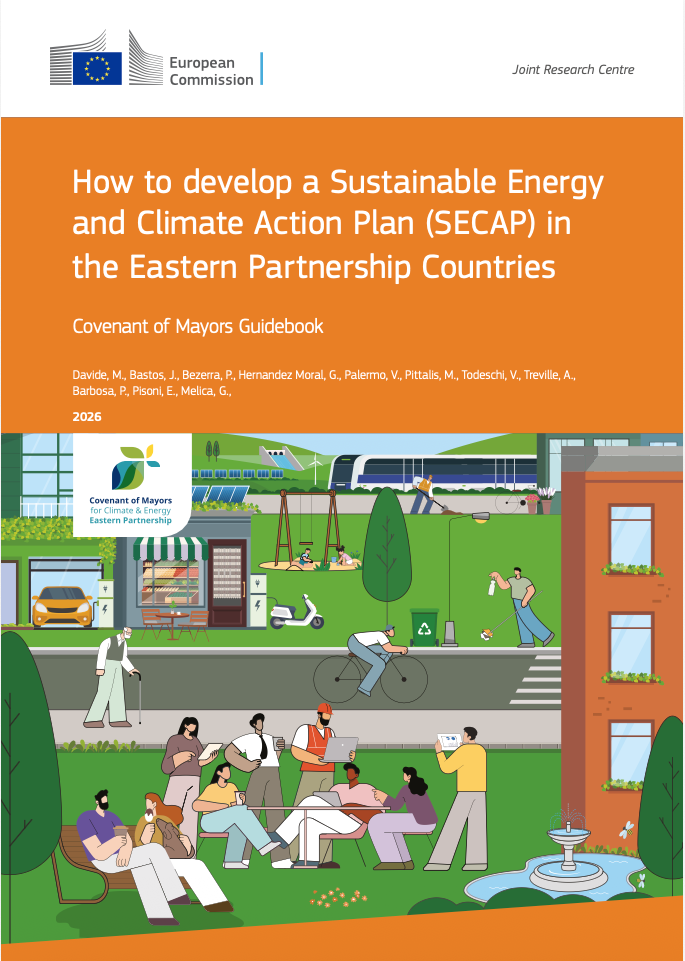
Municipalities in Armenia, Azerbaijan, Georgia, Moldova and Ukraine can now fully use the European Commission’s guidebook on Sustainable Energy and Climate Action Plans (SECAPs). The Covenant of Mayors – East (CoM East) translated How to develop a Sustainable Energy and Climate Action Plan (SECAP) in the Eastern Partnership Countries into Armenian, Azerbaijani, Georgian, Romanian and Ukrainian. The Joint Research Centre (JRC) published the English edition in July 2026.
The guidebook updates the 2018 edition. It takes municipalities through 10 elements, from a formal decision by the local council to monitoring and reporting, explains how to prepare a greenhouse gas emissions inventory and a climate risk and vulnerability assessment. It also covers energy poverty assessment, which was not in the 2018 edition.
By providing comprehensive, step by step guidance, this guidebook supports signatories in the Eastern Partnership region in building a low-carbon, resilient and inclusive society, playing a pivotal role in fostering a culture of sustainability within their communities.
The guidebook follows the current CoM East commitments. Signatories cut CO2 emissions by at least 35 per cent by 2030. By 2050, they aim for a cut of at least 60 per cent compared with 1990, or at least 40 per cent compared with a base year after 2005, and for climate neutrality. New signatories have two years to submit their plan.
Small municipalities can prepare a joint plan with their neighbours. They can either keep their own targets and carry out some actions together, or set one shared target and report together.
The examples come from all five countries: the administrative set-up in Khirdalan (Azerbaijan), the SECAP working group in Chernivtsi and stakeholder engagement in Lutsk (Ukraine), the empowerment of women in Moldovan municipalities, project financing in Alaverdi (Armenia), and a joint plan by five municipalities in Georgia’s Kakheti region.