


Case studies, District heating, Municipal buildings and facilities, Others, RES, Residential buildings, Street lighting, Transport
Ukrainian municipalities discuss how to cut energy costs and adapt to climate change
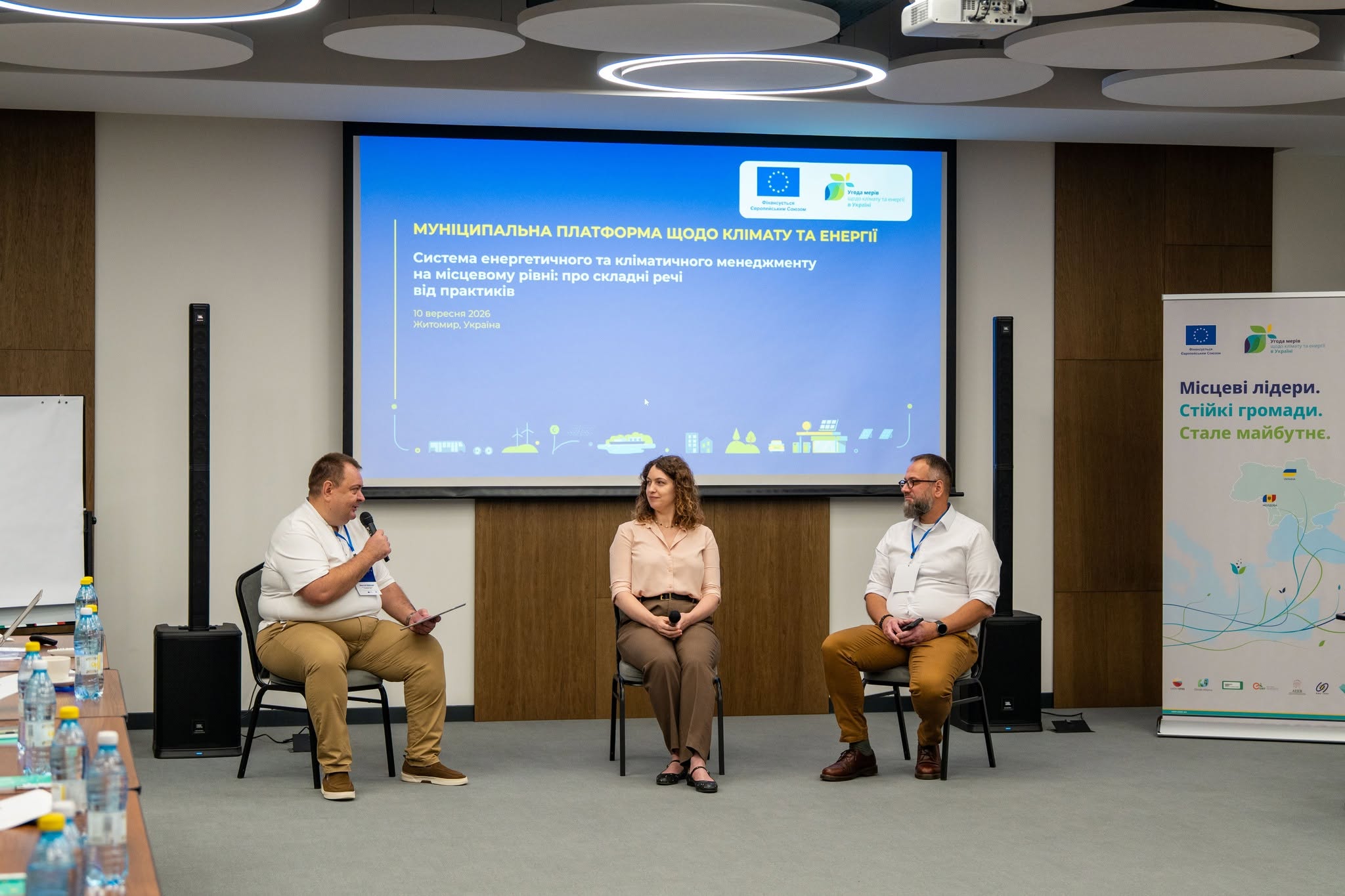
Local officials, community energy managers, experts and representatives of national agencies discussed how communities could use energy and climate data to plan budgets, choose projects and attract investment at the ‘Municipal climate and energy platform’ organised my Covenant of Mayors East in Zhytomyr, Ukraine on 10 September. The platform aimed to agree how communities should develop energy and climate management to save energy, cut budget spending and adapt to climate change.
Maksym Vereshchak, CoM East Deputy Team Leader, presented a survey of 32 communities on the challenges of setting up energy and climate management systems. It showed that 35 per cent of them set energy budgets using baseline consumption data.
The survey covered communities that already had experience in energy management, so the results did not reflect all communities in Ukraine. Of the respondents, 66 per cent had an approved regulation on how their energy management system works, while a third had none. Sixteen per cent had an officially approved method for using baseline consumption data. Energy managers worked on projects in 71 per cent of communities, but about a quarter of communities ranked projects by energy efficiency criteria. Among the energy managers surveyed, 84 per cent took part in shaping local energy efficiency policy.


The survey also showed that needs differed with experience. Communities at the start still needed regulations, named staff, energy monitoring and baseline data. More experienced communities worked on linking energy management with budget and investment planning, on project management and on keeping qualified staff. Vereshchak said a community’s development strategy, municipal energy plan and Sustainable Energy and Climate Action Plan (SECAP) had to fit together and follow the same logic.
The panel on state policy and European approaches explored the roles of the state and communities, the development of energy management, access to data, funding, and the capacity of communities to run projects. Andrii Shyian, Head of Energy Efficiency Development at the State Agency on Energy Efficiency and Energy Saving, and Liubava Radiichuk, Director of the Office of Recovery and Reforms at the Ministry for Communities, Territories and Internally Displaced Persons, said Ukraine already had the legal basis for energy management, and the next step was to use its data in local decisions. In their view, communities should extend energy management beyond public buildings to utility companies, water supply and sewerage, street lighting, local generation and transport.
Participants said energy managers could not always get timely data from energy suppliers and other companies, which made it hard to set baselines and justify investments. Community representatives raised the issue of value added tax (VAT) on loans from international financial institutions for energy efficiency projects in public buildings. The tax raises the real cost of borrowing and puts communities off loans, even for economically viable projects, they said. The discussion also covered funding matched to each community’s situation: grants for those most affected by the war, and loans for those with stable revenues.
Staff shortages came up as well. In small communities, one person may handle energy management, investment projects, finance, procurement, donor relations and reporting at the same time. To help such communities prepare and carry out energy efficiency projects, the panel proposed specialised expert centres and one-stop shops.
In a second panel, moderated by CoM East National Expert Vitalii Volkov, deputy mayors from Zhytomyr, Zviahel and Korosten spoke about the role of political leadership. Svitlana Olshanska, First Deputy Mayor of Zhytomyr, said the city’s energy managers worked directly with its leadership and with a team drawn from different municipal services. Zhytomyr has developed a method to measure actual energy savings that accounts for factors staff cannot control. The city uses the results to motivate public institutions and their teams.
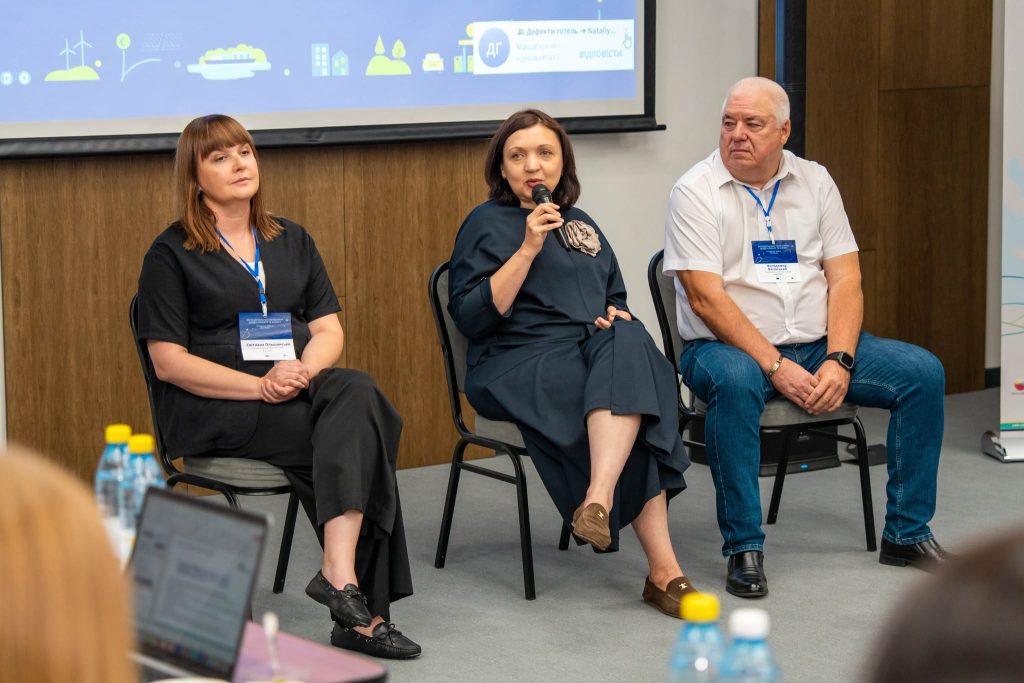
Iryna Hudz, Deputy Mayor of Zviahel, said energy management produced results when decision-makers took the energy manager’s conclusions into account directly. She said cooperation with international partners should help the community’s team build skills and find solutions it could later apply on its own.
Volodymyr Vyhivskyi, First Deputy Mayor of Korosten, said reliable energy monitoring started with accurate metering. Korosten has installed about 350 heat meters, and about 280 of them send readings remotely. The community uses the data to compare buildings, check the effect of energy saving measures and prepare projects for investment.
Zhytomyr City Council staff presented their own practice. Oleksandr Honcharuk, Zhytomyr’s community energy manager, said energy managers should join projects at the preparation stage. He described the sequence as data, analysis, project and result. Monitoring shows excess consumption in a building, analysis finds the cause, and a viable upgrade becomes a project. After the work, monitoring checks whether the community got the expected savings.
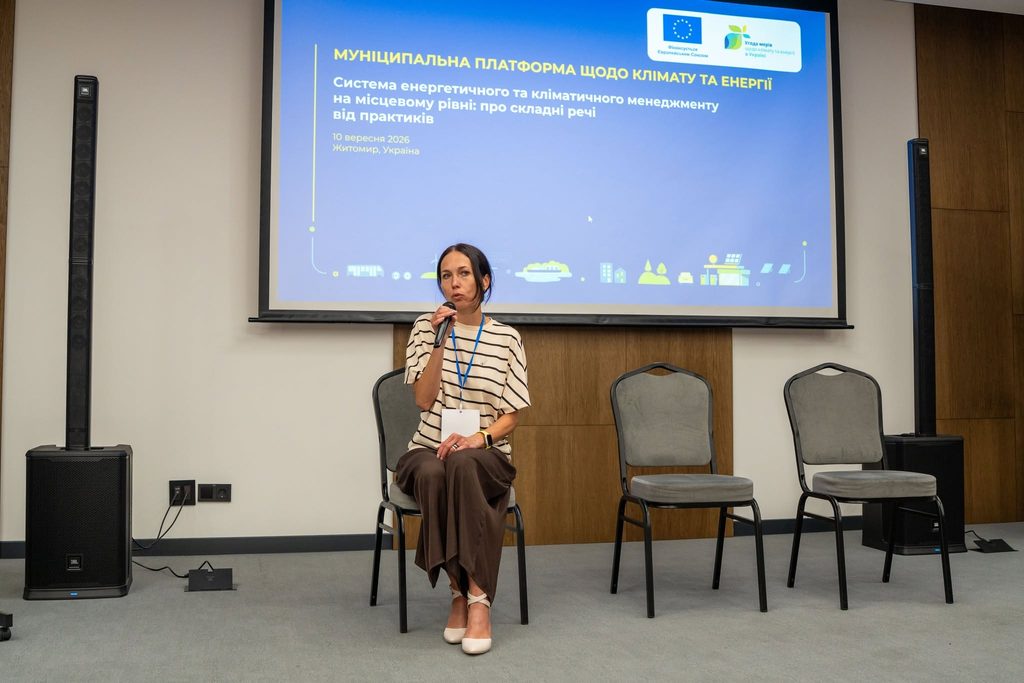
Polina Murashevska, Head of Ecology and Natural Resources at Zhytomyr City Council, said climate adaptation in Zhytomyr involved urban planning, water supply, sewerage, rivers and green spaces. She said river restoration should start with small rivers and streams. In private housing areas without central sewerage, household wastewater could reach ditches, small rivers and storm drains. Cleaning a riverbed alone did not remove the source of pollution. She also said dense construction and the loss of green areas sent more water into storm drains during heavy rain.