


Case studies, District heating, Municipal buildings and facilities, Others, RES, Residential buildings, Street lighting, Transport
How to develop a SECAP in the Eastern Partnership Countries
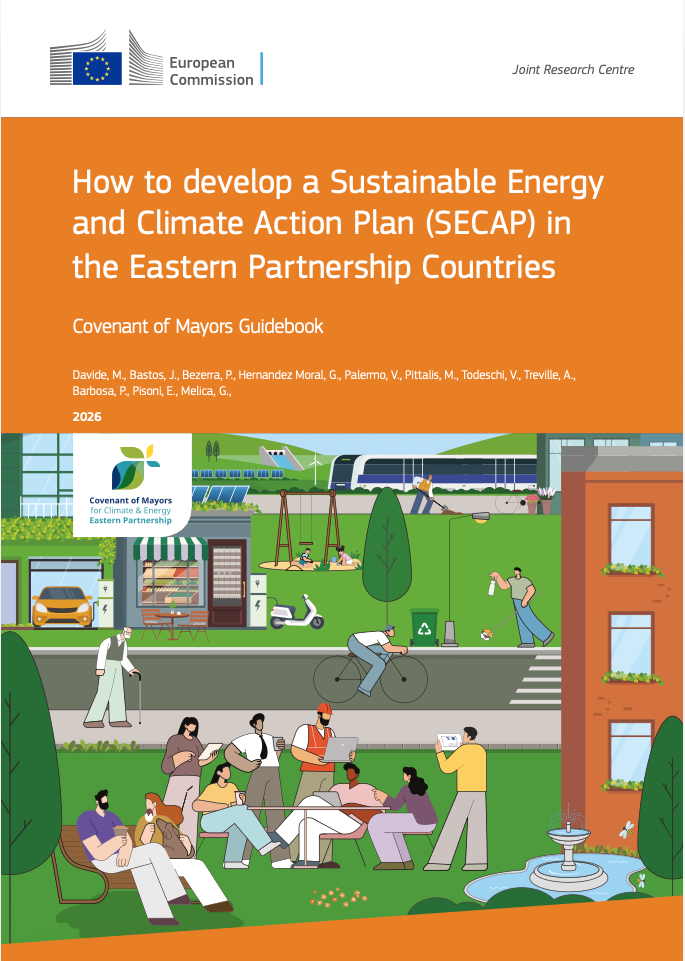
How to develop a SECAP in the Eastern Partnership Countries
In July 2026, the EC Joint Research Center (JRC) published the Guidebook on “How to develop a Sustainable Energy and Climate Action Plan (SECAP) in the Eastern Partnership Countries”. The document is an adapted version of the previously published (in 2025) Covenant of Mayors Guidebook on “How to develop a Sustainable Energy and Climate Action Plan (Main Document) for the signatories in Europe.
By providing comprehensive, step by step guidance, this guidebook supports signatories in the Eastern Partnership region in building a low-carbon, resilient and inclusive society, playing a pivotal role in fostering a culture of sustainability within their communities.
To this end, the guidebook addresses crucial aspects of the design, elaboration, implementation and monitoring of SECAPs. The document is built around 10 key elements that are essential to the success of the whole process, around which municipalities’ action should focus, including: political commitment, mobilizing relevant municipal resources, stakeholder engagement, assessment of baseline situation, setting targets, preparing actions addressing key challenges, securing adequate financing, SECAP adoption and submission, implementation, monitoring and reporting.
The Guidebook represents a major update of the previous guidebook “How to develop a Sustainable Energy and Climate Action Plan (SECAP) in the Eastern Partnership countries”, published back in 2018.
Particularly, it provides updated information on commitments, in line with progress of the European and international climate policy goals. Additionally, it offers further guidance following the development of the CoM East framework, notably the inclusion of the energy poverty pillar. The document now follows a new structure designed to ease reading and address the needs of different audiences.
The document is available on the official website of the JRC.